Development Rights Programs in Other Cities

Development rights programs in other cities carry the core idea behind the New York transfers Michael Stern writes about: capacity a zoning code grants to one parcel can, under conditions, be built on another. The rule is short. A plan fixes how much may be built on each piece of land; one piece is kept below that amount, whether a farm, a historic building or land the public needs; and the unbuilt remainder is counted, certified and carried to a site where more growth is wanted. Everything else is local history, and five cities show how differently that history can run.
The rule, stated once
Every version needs four parts: a sender that gives up building, a receiver allowed to exceed its base, a unit that measures what moves, and a record that binds the sender afterward. Cities differ in which sites may send, how far the rights may travel, and who keeps the market moving. The New York arrangements are covered in the general TDR entry and in the one on landmarks; the cities below are the comparison.
King County: farms that send
Around Seattle the sender is rural land. King County’s program calls itself voluntary, built on incentives and driven by the market, a way to keep growth away from rural and resource lands and direct it into the urban area, and it reports more than 148,000 acres of rural land, resource land and open space protected since 1998.2
Seattle: historic buildings that send
Inside the city the sender is often an old building. A 2018 report to the Seattle City Council explains that new development in parts of the city can earn extra floor area through incentive zoning, and that buying rights from a historic building is one way to earn it, so that the old structure is kept and the sale helps pay for its rehabilitation or upkeep.3 Rights move only inside each neighborhood market, Downtown, the University District or Uptown, so that benefits stay where growth happens; since 2004, the report finds, 74 percent of downtown’s extra floor area under incentive zoning was earned through transfers.3
Seattle’s limits
The same report is candid about what holds the market back. It counts 238 potentially eligible sending sites downtown, only 14 landmarks that have sold any rights since the program began in the 1980s, and a demand so limited that even a very large share of future extra floor area would let fewer than one in eight eligible sites sell.3 It adds that the rules differ by area and zone, that no staff help owners understand them, and that the city offers nothing to bring buyers and sellers together.3
Two West Coast versions of one rule
| Seattle | San Francisco | |
|---|---|---|
| Why it exists | To keep historic buildings standing in growing neighborhoods and let sale proceeds pay for their upkeep | To protect the downtown's historic and architectural character after the growth of the mid 1980s |
| Where rights may go | Only inside its own neighborhood market, Downtown, University District or Uptown | Within the downtown, widened in 2013 to any downtown district |
| What the buyer gains | Extra floor area under incentive zoning | Gross floor area above the base allowance |
| What the seller gives up | Capacity to build more commercial floor area, or for one variant both kinds | Any further building on the lot once every right is sold |
San Francisco: the downtown rule
San Francisco’s version dates from the mid 1980s. Seifel Consulting’s summary of its review for the Planning Department summarises a program created after record downtown growth to guard the city’s historic and architectural character, letting owners move unused potential from a preservation property onto a development property to raise its gross floor area.4 A 2013 note from Hanson Bridgett gives the arithmetic: the lot’s area times the applicable ratio, minus most or all of the building already standing there, and in return the owner agrees never to build the lot out once every right is sold.5
San Francisco widens the field
The same note records the change. Rights had moved only between similar sub districts within downtown, and the market had stalled at times for that reason, so legislation approved by the Board of Supervisors on April 16, 2013 let them travel to and from any downtown district, and from the South of Market Extended Preservation District into downtown in most cases.5 Seifel’s review drew on the Planning Department’s database tracking certification, transfer and use, and weighed whether city owned public buildings should be certified to sell as well.4
Hong Kong: plot ratio that travels
Hong Kong measures capacity in plot ratio terms. The Town Planning Board’s announcement of August 2026 recalls the pilot begun in 2023 in Mong Kok and Yau Ma Tei, where an owner applied under section 16 of the Town Planning Ordinance. Senders were unlimited in number, receivers were capped at two, and all of them had to lie inside one outline zoning plan; a receiver could grow by up to 30 percent, measured against its own maximum, with a land premium charged where one was due.6
Hong Kong across districts
The revised guidelines loosen almost every term. A receiver may now lie under another plan in another part of the territory, the Northern Metropolis included; five further older areas join the senders; the cap of two receivers is dropped; the smallest acceptable receiver falls from 1,000 square metres to 700; and the 30 percent ceiling may be passed by a small margin.6 Senders that become public open space, or that keep a graded heritage building accessible, may also be granted bonus floor area at home to pay for upkeep. The scheme’s place in the city’s podium towers is covered in the Hong Kong entry.6
Hong Kong's plot ratio transfer, after the 2026 revision
- the most a transfer may add, measured against the receiver's maximum gross floor area, now with a small margin over
- 30 percent
- minimum receiving site area, down from 1,000
- 700 sq m
- older urban areas able to send, Mong Kok and Yau Ma Tei plus five more
- 7
- plot ratio of bonus floor area, capped at 200 sq m, for a sending site opened as public space
- 0.4
Hong Kong’s exchange for one house
Before the pilot, heritage was handled lot by lot. A Development Bureau brief to the Legislative Council sets out a non in situ land exchange for a Grade 1 house of 1887 on the Peak: the owner hands lot and house over for preservation and in return is granted a government site of equal size across Coombe Road, bound by the same limits, a ratio of 0.5 and two storeys, at the full market value premium.7 The capacity moves by swapping the land itself.
Tokyo: blocks and districts
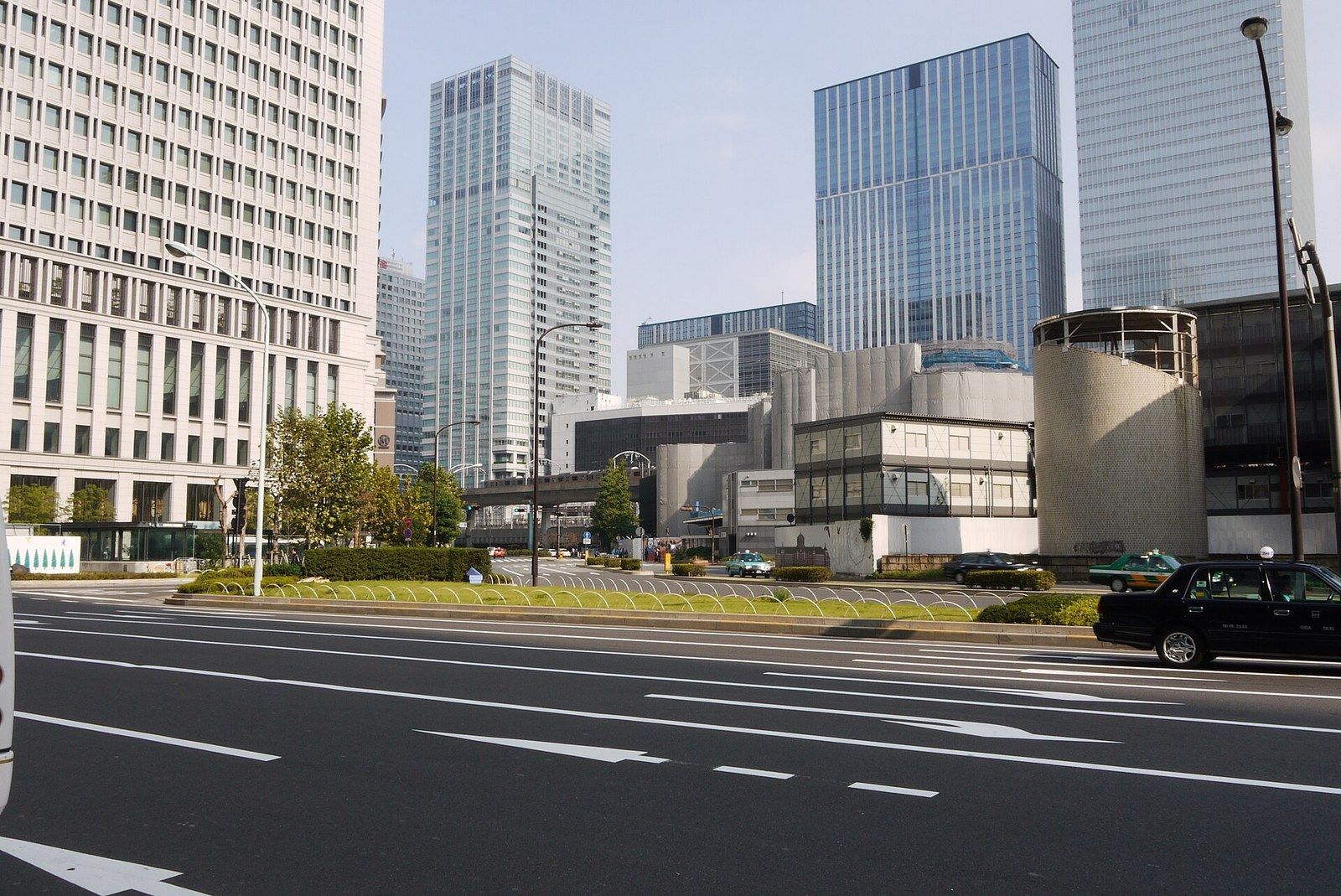
Japan builds the move into its planning tools. The national ministry’s guide to land use planning treats the total permitted density of each zone, set to balance development against infrastructure, as its fundamental rule, and lists the exceptions: in a Specified Block, when a chain of developments spans adjoining blocks, floor area ratio may be transferred among them, and one form of district plan exists precisely to distribute floor area ratio within an area.8 How that shaped central Tokyo is the subject of the Tokyo entry.
Mumbai: paying for land with rights
Mumbai turned the instrument into a form of payment. The National Institute of Urban Affairs study explains that the 1967 plan reserved generous land for public purposes that the city could not afford to buy, so the 1991 revision offered owners rights instead of money for surrendering it, and that by 2000 about 900,000 square metres had been acquired this way without cash.10 The Observer Research Foundation lists what may generate rights, from reserved land and road widening to unused capacity on heritage property and slum rehousing, and notes that the certificates then trade on an open, thinly traded market.9
Mumbai's certificates in numbers
- share of all TDR generated in Mumbai that came from slum rehousing
- 63 percent
- the uniform slum TDR incentive withdrawn in September 2018
- 133 percent
- year the revised development plan began paying for reserved land in rights instead of cash
- 1991
- reserved land the municipal corporation acquired that way by 2000
- 900,000 sq m
Mumbai prices the certificate
The newest chapter changes the unit itself. The Indian Express reported that slum rehousing generated 63 percent of all rights in the city, and that rights earned on cheap outlying land had been spent in full on costly sites elsewhere.1 On September 22, 2018 the state withdrew the flat 133 percent incentive and indexed both the rights generated and the rights used to the land rates of the plots at each end, so a certificate now buys less floor area where land is dear.1 Of every city here, Mumbai has gone furthest in making the measure of a right depend on where it lands.