Zoning Lot Mergers and Declarations

Zoning lot mergers, the as of right route that carries most of the bulk traded in the assemblage work Michael Stern describes, turn on a single verb in the Zoning Resolution. Among the four kinds of zoning lot that Section 12 10 recognizes, the last is a tract that its owners have declared, in a written Declaration of Restrictions, to be one lot for zoning purposes, and the section goes on to say where that declaration lives: recorded in the Conveyances Section of the City Register, or the county clerk’s office, against every lot of record the tract contains.9 The merger exists nowhere else. It appears on no tax map, a distinction drawn out at zoning lot versus tax lot, and it is not in the deeds. It is a filed statement, and the two documents that make it are the subject here.
The declaration and the signatures
The declaration is a short instrument with a long signature page. The Resolution requires signatures from all parties in interest in the covered land, unless a party has surrendered its signature in a separate recordable waiver filed no later than the declaration itself.9 Warshaw Burstein’s 2014 alert describes how that works in a deal between separately owned lots. The owners in fee sign the declaration. Every other holder of a recorded interest signs a waiver, and although the Resolution asks only for a bare statement that the party gives up signing, the custom is to add words subordinating that party’s stake to the declaration and to the development agreement, because a seller’s mortgage that has not been subordinated would stand ahead of the conveyed bulk and could undo it.5 The form of all of this, the alert notes, traces to a memorandum an acting commissioner of the Department of Buildings issued on May 18, 1978, still cited by its author’s name.5
The signatures are the gate. The Nacmias firm’s page on how development rights transfer warns that the Department of Buildings will refuse to certify a zoning lot while any holder of a recorded interest is missing, so a transfer priced, signed and paid for can still leave the floor area exactly where it was.6 RegWatch’s guide lists the plainer preconditions: the lots must adjoin, they should sit in the same or compatible districts, the declaration or the agreement must be recorded with the City Register, and common ownership is not required, since agreements between unrelated owners are routine.3
Seven clauses the merged lot contract settles
- BulkHow much floor area crosses the line, and limits on other rights that ride with a lot, such as dwelling unit count, coverage and yards.
- Light and airIf bargained for, an easement that holds down the seller's own height, rooftop machinery included, so the buyer's windows keep their outlook and can count as legal windows.
- CooperationEach side must sign the other's building applications, the buyer for its tower, the seller for later alterations or rebuilding.
- ViolationsWho cures an open violation on either lot that could block a permit or an occupancy certificate.
- CasualtyWhat happens to the shared bulk if a building burns after the district has been downzoned.
- EnlargementWhether more lots may be added to the merged lot later, and who must agree.
- ConstructionSurveys before work starts, access for inspection, protective attachments, damage and insurance.
The agreement that carries the bulk
A declaration joins lots; it does not say who gets what. The alert observes that the Resolution is silent on how to document the conveyance of bulk itself, so practice supplies a second recorded contract, the development agreement known by its initials as the ZLDA, executed at the same closing as the merger papers and negotiated hard because it governs two buildings for the life of the merged lot.5 Its terms are listed in the figure above. Three deserve comment. The clause securing outlook, which has its own entry, is what lets the buyer’s bedrooms face the seller’s roof and still count as rooms with legal windows. The cooperation clause binds the seller to sign the buyer’s applications, and the buyer to sign the seller’s, for as long as either building stands. And the construction clause reaches the physical edge between the two lots, the shared or adjoining walls described under party walls as well as the overhangs described under cantilevers.
How much travels this way
The merger is the workhorse. StreetEasy’s primer calls it the commonest kind of transfer, clustered in Manhattan below Central Park and needing no sign off from any city agency, and 99% Invisible makes the same point from the other side, that exchanges between adjoining buildings carry a large share of everything that moves.12 Furman Center figures reported in 2013 measured it: 320 of the 353 transfers at arm’s length in the years 2003 to 2011 were mergers, which together shifted well over five million square feet between them, with 85 percent of all transfers falling in Manhattan’s six southernmost community districts and an average price outside the special districts of $234 a square foot.8
The Skyscraper Museum explains why the route produces towers. Because the ratio introduced in 1961 fixes bulk rather than form, a builder who gathers the unbuilt ratio of neighboring parcels may arrange all of it on one shaft, and the museum describes developers spending years assembling adjacent properties for exactly that purpose, a pursuit it likens to a board game played with invisible pieces.7 Its model of one Park Avenue tower sets out the trade in three dimensions, the bulk of a demolished hotel and of low buildings on 57th Street restacked in a single slender column, and the donor sites held permanently at their present size.7 RegWatch notes the commonest sender is a protected or low building that cannot be enlarged, whose capacity goes to the lot beside it through exactly this device.3
The merger's share of the market
- of the 353 transfers at arm's length in those years were mergers
- 320
- the merger's share of all transfers in those years
- 91 percent
- the bulk, in square feet, those mergers shifted between lots
- 5.4 million
- of transfers fell in Manhattan community districts one through six
- 85 percent
River Park, a merger on the ground
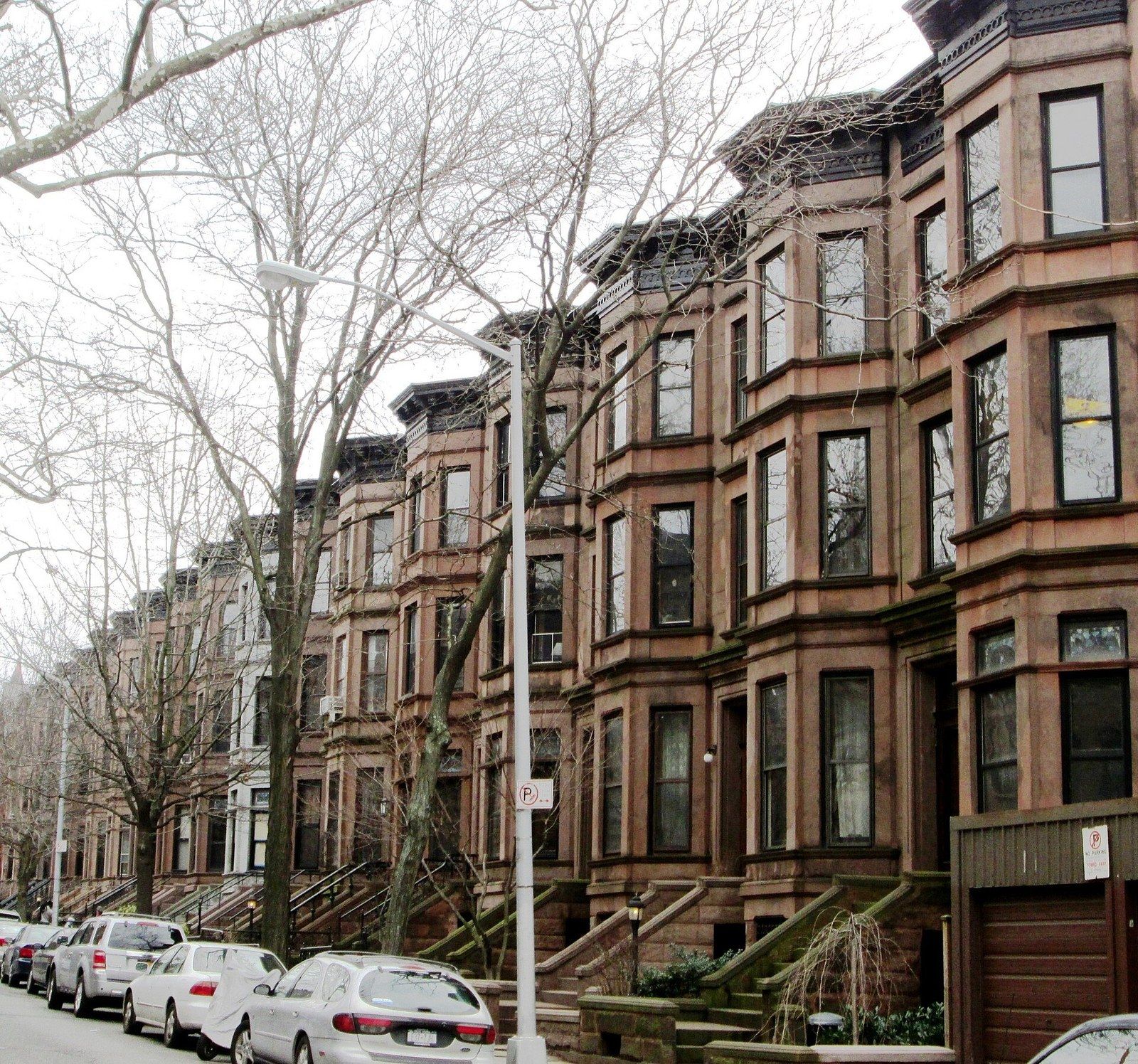
The Municipal Art Society followed one case to show what the papers produce. Its River Park study concerns the former hospital property in Cobble Hill, Brooklyn, where a rezoning proposed in 2015 drew opposition and the builder turned instead to a merger, pooling the rights of three owners across two blocks and four lots.4 The geometry allowed it, MAS explains, because Pacific Street had been demapped in 1969, leaving a superblock with no public street to interrupt the tract; the agreement filed that September moved more than half a million square feet and tied some of the lots to medical use.4
River Park, Cobble Hill, in the order MAS tells it
- 2014The hospital closes; the state seeks a buyer who will keep some medical services.
- 2015An upzoning is proposed and opposed by the community board, civic groups and the council member.
- 1969, in retrospectPacific Street had been demapped, leaving a superblock across which rights could move without a street in the way.
- September 2015A development agreement among three owners, over two blocks and four lots, moves more than half a million square feet and restricts some lots to medical use.
- ResultSeven buildings planned, two of them towers of about 250 and 475 feet, and no hearing held on the merger itself.
MAS draws the lesson about process. A merger is as of right, so it triggers neither the city’s land use review nor its environmental review, and no board or council member had a vote on the outcome; the society asks for a threshold of transferred bulk above which review would be required, for notice to community boards when a plan relies on acquired rights, and for a searchable public dataset of every development agreement filed in the city.4 The same study records how far a merger can reach, noting a 57th Street supertall that obtained about two thirds of its bulk by transfer.4 A verb, a signature page and a recorded contract: that is the whole machine, and the Brooklyn block shows what it builds.