Metal Cladding, Patina and Attachment

Copper, bronze, aluminum and stainless steel arrive at a facade as coil and sheet with a temper and a thickness, and the engineering of a metal skin, which Michael Stern’s development work meets wherever a tower is clad in something other than glass, is the engineering of what that sheet does in weather, against its neighbors and on its clips. The histories of these metals in architecture are told on michaelsternjds.com, copper at Copper Cladding and Patina and bronze at Bronze in Architecture, and this entry leaves them there. What follows is the material as a maker handles it.
Copper as it arrives
Architectural copper is a defined product. The Copper Development Association’s handbook on exterior copper names the usual alloy, 99.9 percent pure and meeting ASTM B370, supplied as strip under 24 inches wide or sheet up to 48, in thicknesses specified by weight per square foot, and in six tempers from soft, for ornament, to full hard; cold rolled is the common choice because it balances strength against the formability that lets copper take complicated shapes.7
Patina as a schedule
The color of copper is a function of time and air. The handbook explains that weathering runs faster in industrial and coastal air laden with pollutants and acidic moisture, that arid climates can postpone the green stage indefinitely and leave the metal a deep penny brown, and that low slopes patinate faster than steep or vertical surfaces.7 Inspire Design’s note on patina puts the corrosion rate at roughly 0.6 to 1.1 microns a year and notes factory processes using copper mineral compounds to bring a panel to an intermediate or green stage before it leaves the plant.8 HISTORY’s account of the Statue of Liberty gives the famous timetable: bright copper to dull brown within 15 years, green patches noticed by 1903, half green by 1910 and fully green a decade later, with a 1906 plan to repaint it abandoned after public protest and because the patina shields the copper under it.9
How copper weathers
- NewBright, salmon colored metal straight from the mill.
- MonthsThe surface dulls to a penny brown as a thin oxide forms.
- YearsThe brown deepens toward near black; in dry climates the metal can stay here indefinitely.
- A decadeGreen sulfate begins to appear, first on surfaces that hold rain.
- 25 to 30 yearsA full soft green patina covers the panel and slows further corrosion.
Bronze
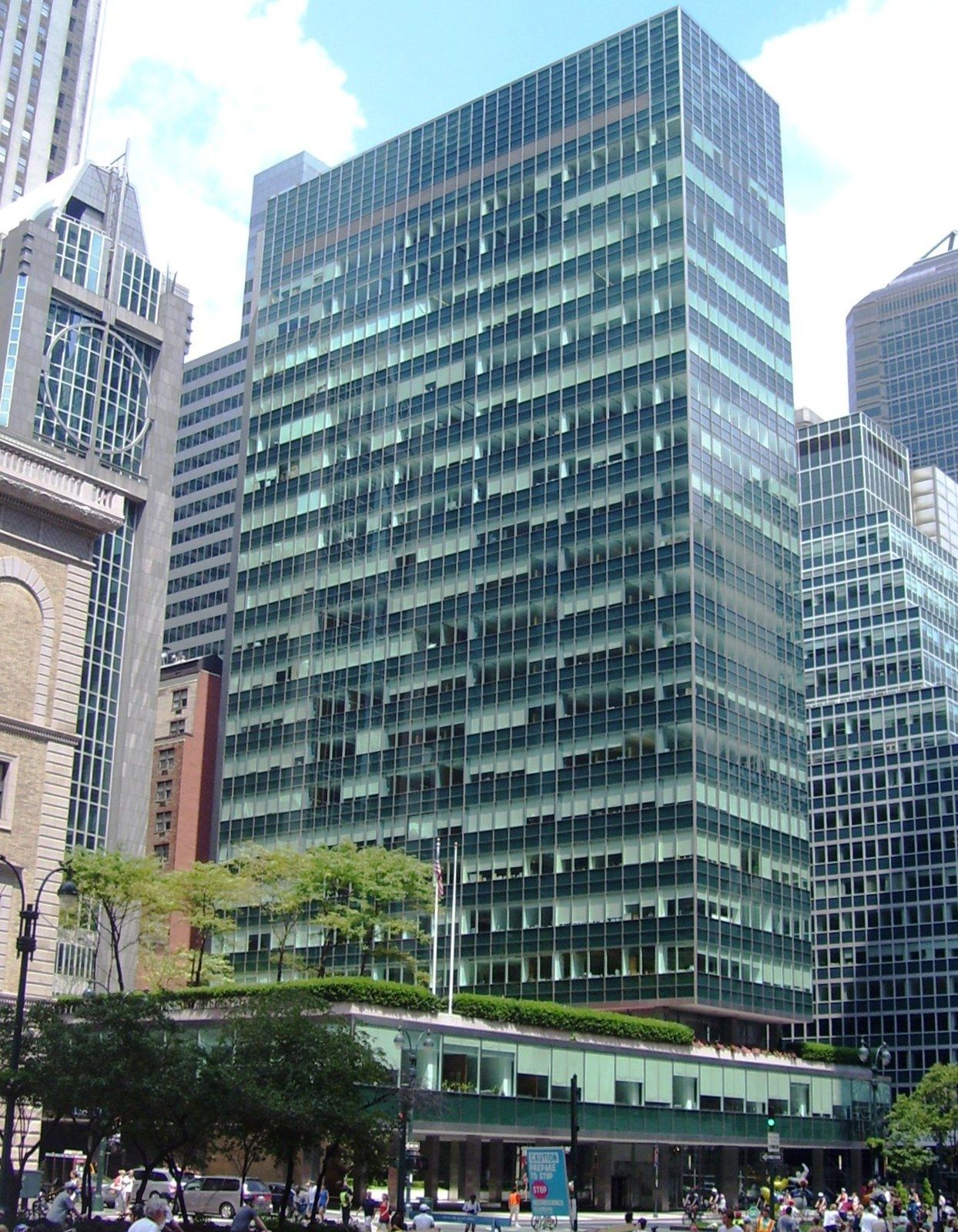
Bronze is copper alloyed for hardness, and the alloy changes the color schedule. The New York Times’ report on the Seagram Building in 1957 described the first use of bronze to sheathe a whole building, chosen for its color before and after aging, its corrosion resistance and its suitability for extrusion, which gave the vertical mullions the sharp edges the architect wanted; a fabricator’s official expected the exterior to darken to nearly ebony rather than turn green, because the copper content had been reduced to make the metal as hard as possible.1 The alloy can also be finished by hand. Dezeen’s report on the Stirling Prize describes a London headquarters faced in sandstone and fins of hand patinated Japanese bronze, prototyped one to one in a warehouse and stress tested at extreme temperatures before the final design.2
Stainless steel
Stainless steel does not weather at all, which was once a novelty. DSM Stainless Products’ note on the Chrysler Building records the austenitic alloy of 18 percent chromium and 8 percent nickel used on the crown, needle, window frames and ornament when the tower was finished in 1930, chosen for a reflective surface that would carry the rising lines into the sky, and an inspection committee set up by the testing society in 1929 that examined the panels every five years until 1960 and found minimal deterioration.10
Two metals, two centuries of weathering
| Seagram Building bronze | Chrysler Building stainless | |
|---|---|---|
| Finished | 1958 | 1930 |
| Alloy | Bronze with reduced copper content, for hardness | 18 percent chromium, 8 percent nickel austenitic steel |
| Form | Extruded mullions with sharp edges | Thin sheet on crown, needle and frames |
| Expected aging | Darkens toward ebony rather than greening | Stays bright; minimal deterioration found over 30 years of checks |
| Why chosen | Color before and after aging, corrosion resistance, extrusion | Reflectivity to carry the rising lines, corrosion resistance |
Aluminum and weathering steel
The other common skins weather differently. Architizer’s collection of patina facades pairs copper skins that will smooth into green with weathering steel towers and studios whose surfaces are meant to rust to a stable brown, and treats the patina in each case as a protective layer that preserves what would otherwise corrode, chosen to suit the local climate.5 Aluminum, the metal of most curtain wall framing, has its place in unitized construction.
Galvanic pairs
Metals in contact corrode each other. The Copper Development Association’s handbook explains that copper is highly noble, so it resists corrosion in contact with other metals, while galvanized steel, plain steel and aluminum are anodic and can corrode where they touch copper; fasteners for copper work must therefore be copper, copper alloy or stainless steel, and rain running off copper must never be allowed to pass over or collect on aluminum or galvanized gutters and downspouts.7 The same runoff carries copper salts that stain light colored porous stone green, so a careful design adds small gutters and drips to steer water away from surfaces that would show it.7
Cleats and movement
Sheet metal has to be free to grow. The handbook calls for combinations of fixed and expansion cleats, expansion joints and a suitable substrate chosen to industry recommendations so that the copper can expand and contract with temperature without buckling or tearing; fastener selection and spacing are named as the things that make a long lived system.7 ArchDaily’s survey of copper projects describes a Swedish office whose nine thousand pre oxidized copper panels hang on a concealed stainless steel structure, chosen to minimize maintenance over time, and notes the stages the metal passes through, from orange through gray and black to green.3 How much a facade joint has to take, and from where, is the subject of joint movement.
Complex geometry
Wide panels and odd shapes test the attachment. A Facade Tectonics Institute paper on an Arkansas office building describes copper panels in alternating ribbons with glazing that follow ramps up and down a six floor office block, 5,300 panels of 600 unique shapes, made unusually wide so their joints align with a five foot curtain wall module; the three dimensional shapes required a custom flat seam interlock and a custom clip system, and tabletop mockups helped develop shapes that lock together without departing from the design.6 A single parametric model family generated 98 percent of the panels along with the fabrication data, and the system went up with no field measurement and almost no field modification.6
A copper skin with 600 shapes
- area clad in copper panels
- 50,000 sq ft
- individual panels in the system
- 5,300
- uniquely shaped panel types
- 600
- share of the panels generated from a single parametric model family
- 98%
Oil canning
Flat metal shows every ripple. The same paper names the minimization of oil canning, the visible waviness in a wide thin panel, as one of the two engineering problems its custom system had to resolve, and reports splitting a single panel into several components so it could be fabricated and reassembled true to the facade geometry.6 Where a metal panel sits over a sealed cavity, the Copper Development Association’s guidance on fixed and sliding cleats is what keeps the thermal movement from printing through as waves.7
Metal that breathes
A metal skin can also be a machine. The Architects’ Journal’s building study of the London headquarters counts 117 bronze fins the designers call gills, each with a section that opens or closes according to exterior conditions to admit air while filtering it and holding down noise, set against chunky sandstone corners whose hollow sections carry air through the structure; the critic found the fins over engineered next to the glazed perimeter but acknowledged the technical achievement and the research future offices would draw on.4
Recycling and maintenance
The case for metal ends where it began, with the coil. ArchDaily records that copper can be recycled almost indefinitely without losing its properties, that a World Bank report expects demand to rise with wind, solar and batteries, and that pre oxidized panels are chosen partly to minimize the cost of maintenance over time.3 Inspire Design adds that a patinated roof or wall needs none of the repainting or resealing other materials demand, and expects a service life beyond a century even on waterfront sites.8
Where the histories live
The stories of these metals, from the first copper roofs to the bronze of Park Avenue, belong to the sibling site’s material pages linked above. What belongs here is the clip, the cleat, the fastener and the gap, because a skin is only as durable as the way it is held.