Schedule Float and the Cost of Sequence

Schedule float, the slack a planner builds into a construction program, is made by two kinds of people on the sort of job Michael Stern writes about, where few precedents exist to lend it a sequence: the scheduler who draws the network of activities, and the concrete crew whose floor cycle decides whether the network was fiction. The first works at a desk with a critical path. The second works at the top of a climbing form. This page follows both, because a sequence error on a tower is an error in the first person’s drawing that is paid for in the second person’s hours.
The network and its longest path
The scheduler’s tool is older than most of the buildings it has planned. Critical path scheduling was devised in the late 1950s by Morgan Walker of DuPont and James Kelley of Remington Rand, with precursors in DuPont’s wartime work, and was applied to a major skyscraper for the first time in 1966 on the twin towers of the original World Trade Center.1 The method takes a list of every activity, the time each takes and the dependencies between them, and computes the longest chain of dependent activities from the opening task to the last. That chain is the critical path; its length is the shortest time the project can take; and an activity on it has no slack at all.1
Everything off that chain has some float. An earned value practitioner sets out the three kinds. Total float is how long an activity can slip without moving the completion date; free float is how long it can slip without delaying the next activity; interfering float is the difference, slack that is shared with everything downstream, so that using it leaves less for others.2 It goes on to call float a program’s shock absorber and tracks its consumption rate as a leading indicator: on one highway scheme the average float across fourteen non critical paths fell from 6.2 weeks at award to 2.1 weeks six months in, and the doubling of the consumption rate between month three and month six was the warning that something had changed.2
Three kinds of float
- Total floatHow long an activity can slip without moving the completion date. When it reaches zero the activity is on the critical path.
- Free floatHow long an activity can slip without delaying the next activity. Never more than total float.
- Interfering floatTotal minus free: slack that, when used, does not delay the successor but shrinks what is left for everything downstream.
- Consumption rateHow fast the average float on non critical paths is being eaten, tracked as the leading indicator that every path is about to turn critical.
Who owns the slack
Float has an owner, and the question of who is argued on every delayed job. A scheduling consultancy lays out the positions. A contractor who plans the sequence and leaves a cushion between the date it expects to finish and the date the contract requires may say the cushion is its own, so that a delay caused by others erodes its plan even if the required date is safe. An employer may say the contractor has no remedy for being prevented from finishing early, so no extension is due until the required date itself moves.3 The word float is rarely defined in conditions of contract, the consultancy notes, so the answer turns on the wording of the extension of time clause, and the Society of Construction Law protocol’s position is that the project, rather than either party, holds the float where the contract is silent.3
On an unprecedented tower this matters more than usual, because the float is where the unknowns were hidden. A planner who cannot say how long an untried facade will take to install gives it a generous duration and surrounds it with slack. Whoever owns that slack owns the right to spend the project’s margin for error, and the contingency entry treats it as the time twin of the money carried for the same unknowns.
The floor cycle, where the sequence becomes concrete
The second maker of the schedule is the crew, and its unit of time is the floor cycle. A formwork manufacturer describes the stakes: on a tall concrete frame every hour saved on one floor repeats on every floor above, the formwork system is a primary driver of cycle time, and a system that is too heavy or complex produces logistical delay while one that is too light compromises finish and safety. Wind pressure on the formwork panels grows with height, so the sideways stiffness of the system itself becomes a design question.4
A New Zealand concrete contractor makes the dependency explicit: the structural system chosen determines almost every other decision, the formwork approach, the order of construction, the reinforcement detailing and the program. A core of concrete is often raised ahead of the surrounding structure with jump form or climbing form, giving an early stable spine from which the remainder is sequenced, and slabs that are post tensioned and beamless are used because they allow longer spans, thinner slabs and faster floor cycles than conventional reinforcement.5 The contractor’s advice is that an experienced builder belongs in those discussions during design, not at tender, which is the scheduler’s problem stated from the other side.5
Slipform against jumpform for a core
| Slipform | Jumpform | |
|---|---|---|
| Movement | A continuous pour, the rig rising as the concrete gains strength | Pour a lift, let it cure, then climb to the next step by crane or hydraulics |
| Speed | Quicker, with careful planning a prerequisite | More deliberate, one step at a time |
| Geometry | A simple core wanting a rapid, joint free finish | A core whose shafts and walls change higher up |
| Weather | The mix is retuned to conditions, with about 20 degrees Celsius the ideal | Several mixes cleared in advance so summer and winter pours both work |
Choosing how the core climbs
The core is the pacing item, and the choice of how to form it is a schedule decision disguised as a methods decision. A formwork manufacturer compares the two systems. Slipform pours continuously, the rig lifting itself as the concrete sets, and is quicker, suited to a simple core needing a joint free finish and often paired with steelwork that follows the core closely; it is labor intensive for the short period it runs and depends on adjusting the mix to the weather. Jumpform casts, cures and climbs in steps and suits a core whose shafts and walls change higher up; where a job runs through both summer and winter the manufacturer advises having more than one mix approved in advance.8 Many sites lack the crane capacity for crane climbed systems or cannot risk losing days to crane wind limits, which is why self climbing hydraulic systems are the common answer.8 The page on climbing forms describes the equipment itself.
A core built before its frame
The plainest case of sequence as money is a tower where the usual order was reversed. Building Design + Construction recounts how the builder of Eleven Times Square, a 40 floor Manhattan office tower, poured its concrete core before erecting any steel, an approach common in Europe that New York’s trades had resisted on safety grounds, and finished early as a result. The core rose inside a hydraulic form while the steelwork was being fabricated elsewhere, and the construction manager’s own explanation was that the schedule of the pours no longer depended on anyone else’s work.6 The core walls entry and the entry on climbing formwork describe the equipment and the embedded steel that let the frame catch up.
Float consumption as an early warning
- At awardA 78 week critical path and an average of 6.2 weeks of total float across the non critical paths.
- Month threeAverage float 4.8 weeks, with 1.4 weeks consumed in the quarter, a pace the float could absorb for ten months or more.
- Month sixAverage float 2.1 weeks, with 2.7 weeks consumed in the quarter, nearly twice the earlier pace, and three activities down to half a week.
- The causeUnexpected contamination in ground stabilisation work took three weeks of float from the drainage and kerbing paths and forced two activities to be resequenced.
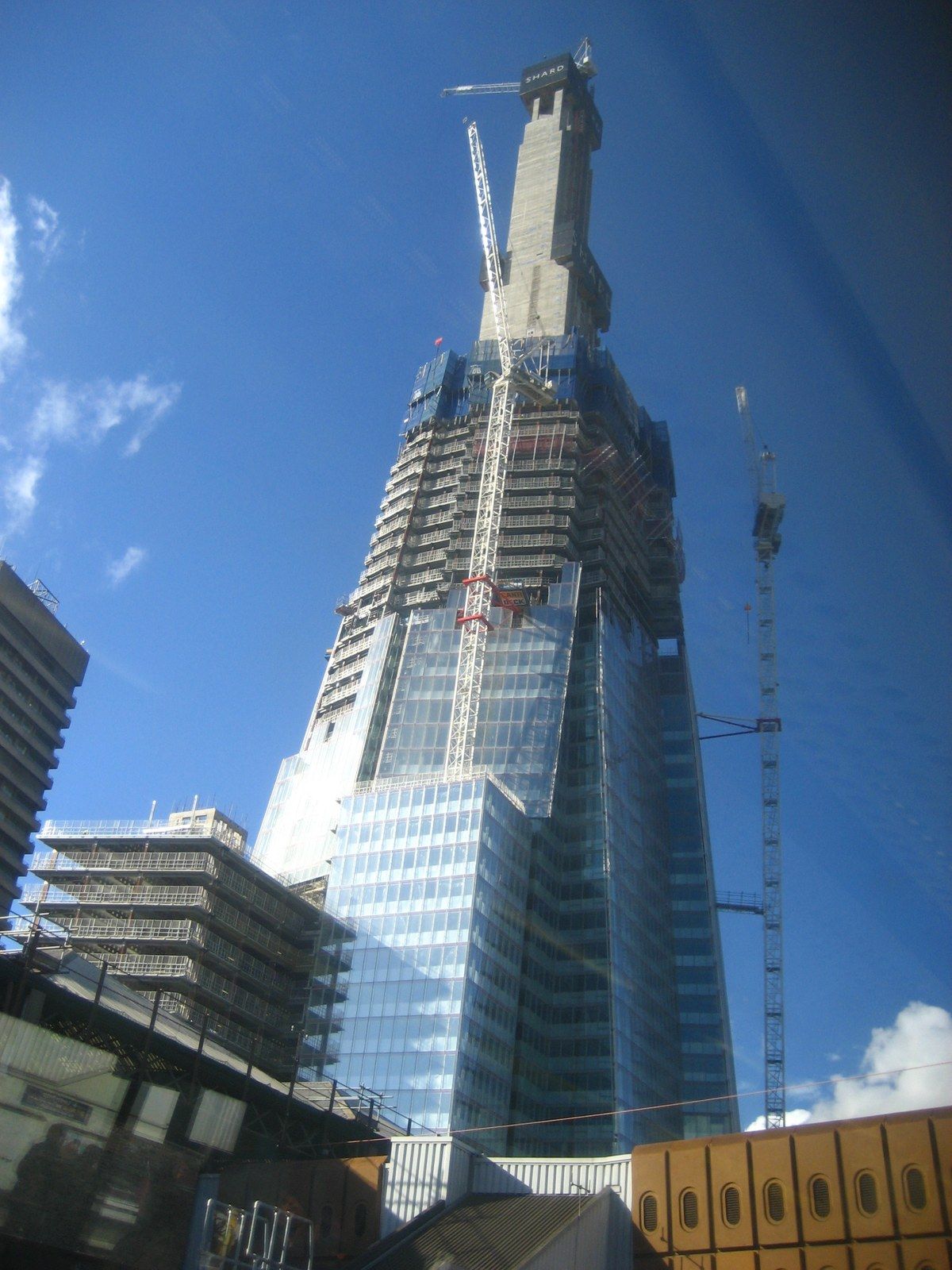
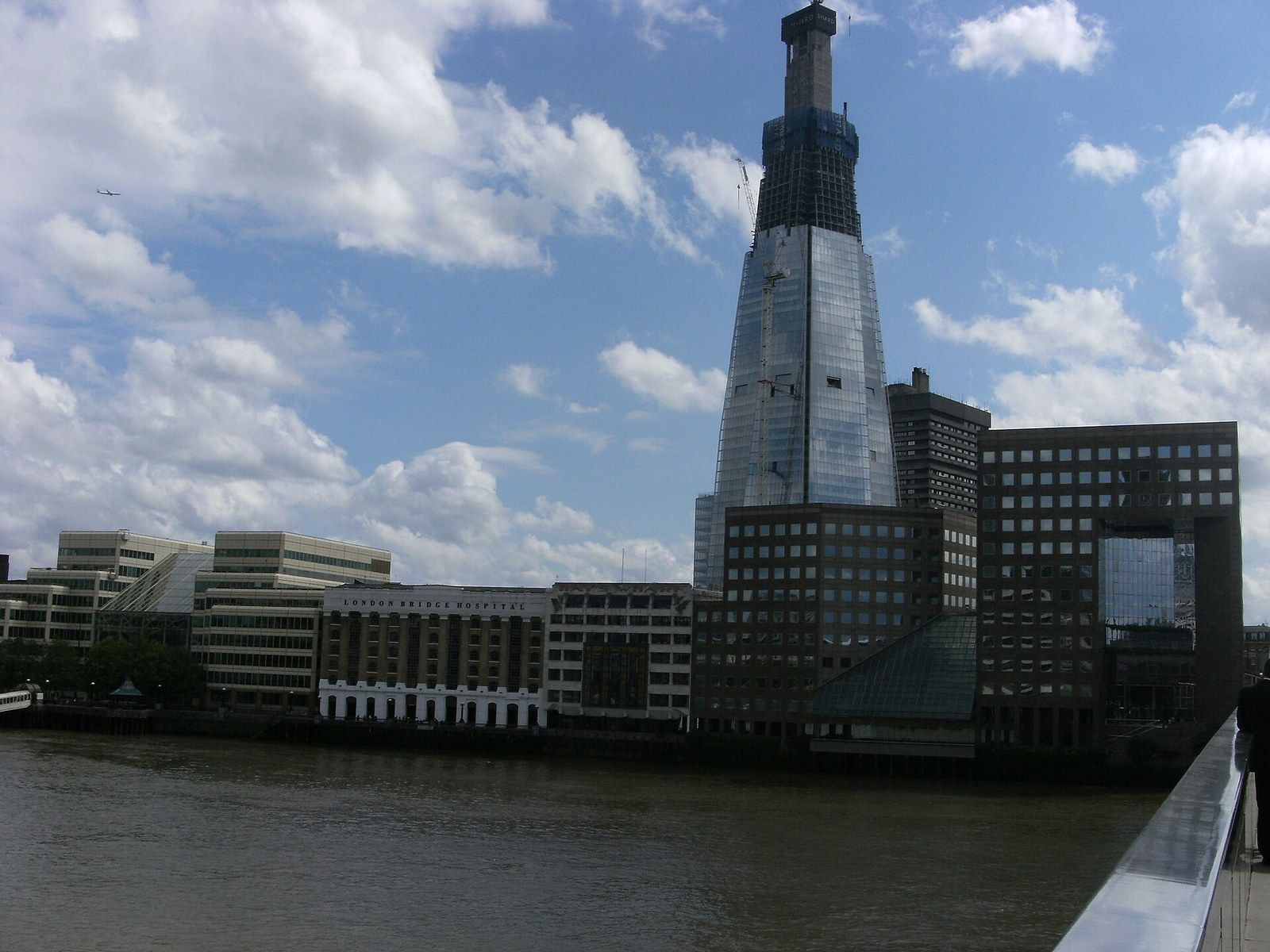
London offers the same lesson at greater height. Engineering News Record recorded that the Shard’s core topped out on time at 72 floors despite a delayed start, because top down construction with plunge columns let the basement be excavated while the core went up, clawing back some eight weeks; the core rose at an average of two meters a day, and fixing the crane to the slipform rig rather than to the finished wall below was credited with boosting progress.7 The top down construction entry covers the method.
Why a sequence error is paid twice
Put the two makers together and the double payment becomes visible. When the planner puts an activity in the wrong order, the first cost is time: the critical path lengthens by the activity’s drag, the term critical path scheduling uses for how much an activity on the longest chain extends the whole project.1 The second cost arrives in the field. A crew whose cycle was tuned to one sequence now waits, or works out of order, or returns to a floor it had finished, and the formwork manufacturer’s arithmetic applies in reverse: every hour lost per floor repeats on every floor above.4 The time is paid once on the program and again in labor, and the second payment is the one the owner sees on the invoice. The maker’s rule of thumb survives all of this: find the core, fix its cycle, and fit everything else to it.