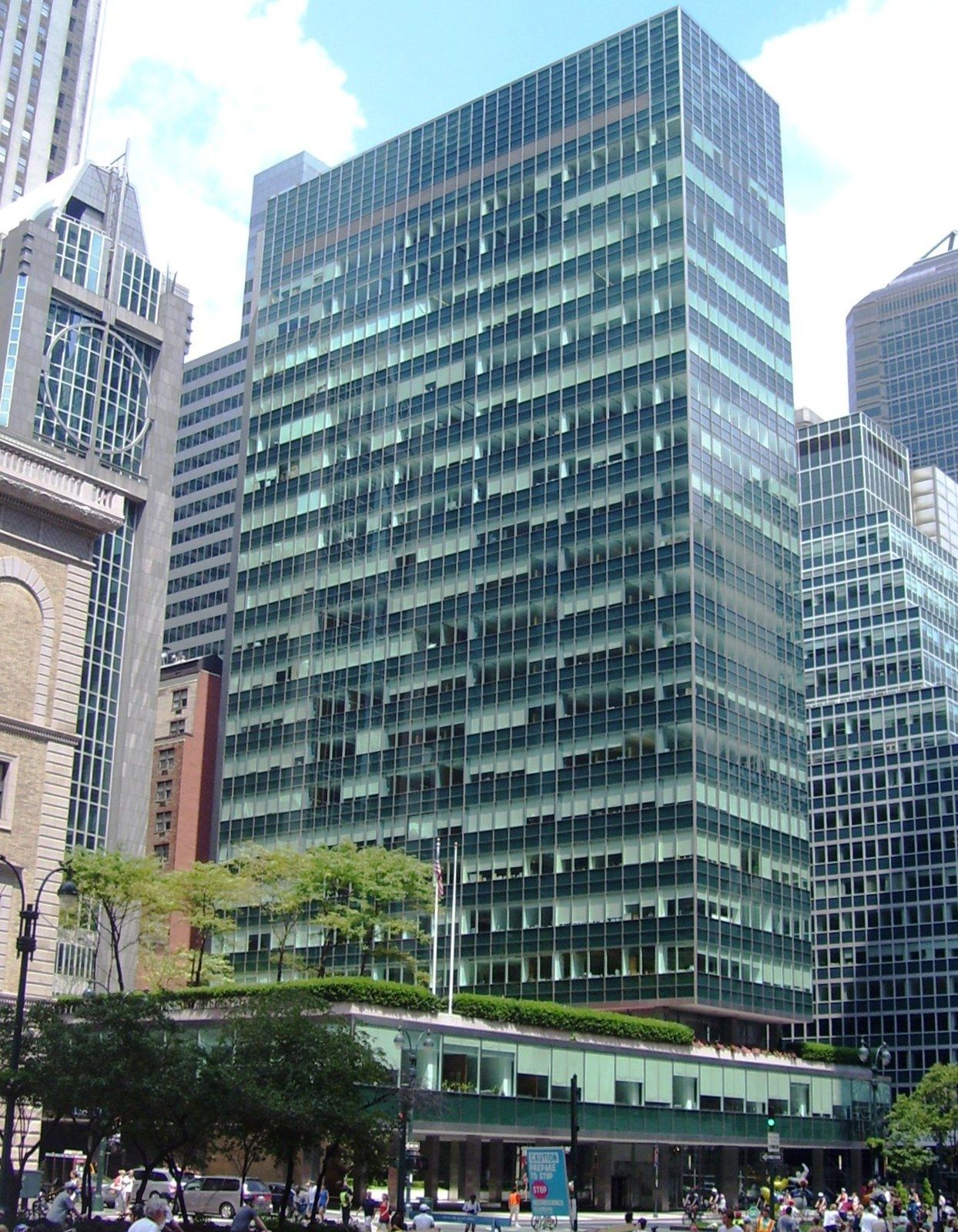
Vortex Shedding and Across Wind Response

Vortex shedding, the across wind response at the centre of the supertall subject Michael Stern works in, is clearest when walked, from the sidewalk at the foot of a tower on a gusty morning to an apartment near the crown on a calm looking afternoon. The walk begins where the wind is most obvious and the building is most still, and it ends where the building is moving and the wind, to anyone looking out of the window, seems to have dropped.
Start on the pavement. Anyone who has rounded the corner of a tower downtown knows the wind is fiercer at the base than it was a block away. BBC News explains the cause as a downdraught: air meets the windward wall and, with nowhere else to go, is pushed up, down and around the sides, and the share forced downward arrives on the street at speed.1 Square corners accelerate the flow further, and where several towers stand close together the air is squeezed through the gaps between them, an effect that in London is sharpened by a medieval street pattern narrower than the Manhattan grid.1 The same report records that New Yorkers were complaining about the wind off the Flatiron Building more than a century ago, when 93 meters counted as tall.1
Where the air goes when it meets a tower
- The faceAir strikes the windward wall and, with nowhere to go, is driven up, down and around the sides; the downward share speeds up the wind on the sidewalk.
- The cornersFlow separates at square corners and accelerates; several towers close together squeeze it further through the gaps between them.
- The sidesBehind each corner a region of low pressure forms, and the suction tugs at the tower instead of pushing on it.
- The wakeVortices roll off one side, then the other, in an alternating pattern that travels downwind and can still be organised when it reaches the next building.
Look up at the lower floors next, because that is where a storm does its visible damage. A study at Florida International University, reported by The Guardian, compared two Houston storms of 2024: a derecho in May with downbursts peaking around 90 mph, and Hurricane Beryl in July with similar sustained speeds.2 The derecho dislodged facade panels and broke glass, especially at the corners and on the lower storeys, while the hurricane left the same towers virtually unscathed, because a downburst spreads outward in every direction when it reaches the ground and bounces between neighbouring buildings, driving pressures above the values the towers were designed for.2 The researchers stressed that the speed of a storm matters less than how its wind is dispersed, and that a building responds to a thunderstorm differently from the way it responds to a hurricane.2
Now follow the air around the corner. A boxy tower is what engineers call a bluff body, and The B1M describes what the flow does to it: it separates at the corners, leaves a region of low pressure in the lee, and that low pressure pulls at the tower as suction instead of pushing on it.3 The pulling is not steady. Swirls of air roll off one side and then the other, and each departure gives the building a small sideways tug. The B1M notes that this is what sent engineers to wind tunnels with scale models in the first place, once the boxy towers of the 1960s had replaced the stepped profiles of earlier decades.3
Why a steady breeze is the dangerous one
Here the walk reaches its lesson. The alternating pattern of swirls has a name, the Kármán vortex street, and Peter Irwin, writing in Physics Today, sets out the arithmetic that makes it matter.4 A building sheds vortices at a frequency equal to the wind speed divided by the building’s width, scaled by a shape factor called the Strouhal number; a building also rocks at a natural frequency of its own, about 0.2 cycles per second for a 50 story tower and 0.1 or less for a 100 story one.4 When the two rates coincide, each departing vortex arrives at the worst possible moment, like a push on a swing, and the sideways motion grows. In Irwin’s worked example a 100 story tower 50 meters wide reaches that coincidence at about 130 km/h, a speed well within range in many cities, provided the wind holds for several minutes so the motion can build.4
The numbers behind resonance
- Natural frequency of a 50 story building, a five second period
- 0.2 Hz
- Natural frequency of a 100 story building, an eight to ten second period
- 0.1 Hz or less
- A typical Strouhal number for a sharp cornered plan
- 0.14
- Inherent damping ratio of a typical tower before any damper is added
- 0.01 to 0.02
Two further points from the same article explain why steady wind beats a gale for trouble. A coherent vortex street forms only when the wind is smooth; the turbulence of a dense city breaks the swirls up before they organise, so the towers most exposed are those that stand clear of their neighbours or face open country upwind.4 And once a building starts to move, a phenomenon called lock in lets the structure hold the shedding at its own frequency even as the wind drifts away from the critical speed.4 A violent storm is gusty and disorganised, and its pressures are the ones strength design already covers. A moderate wind blowing evenly for a quarter of an hour at the wrong speed is the one that makes the top floor sway.
Structure magazine separates the loads a tower carries into three directions at once: along the wind, across it, and in torsion.5 Only the fluctuating part of the pressure produces the across wind and twisting loads, and the resonant part of that response depends on how heavy, how stiff and how damped the structure is rather than on its shape alone.5 The article observes that ASCE 7, like most codes, treats the along wind case thoroughly and gives no guidance on the across wind case, which is why designers of slender towers tune their structures so that the resonant frequency sits above the shedding peak at design wind speeds, and why they lean on wind tunnel data to find that peak.5
Two storms, one city
| May 2024 derecho | July 2024 hurricane | |
|---|---|---|
| Peak wind | Downbursts to about 90 mph | Category 1, similar sustained speeds |
| Character | Erratic bursts that spread outward on reaching the ground | Steadier flow without the explosive bursts |
| Where it hit | The corners and the lowest storeys, with suction on the flanks | Spread across the height |
| Result | Dislodged panels, broken glass, debris on streets | Buildings virtually unscathed |
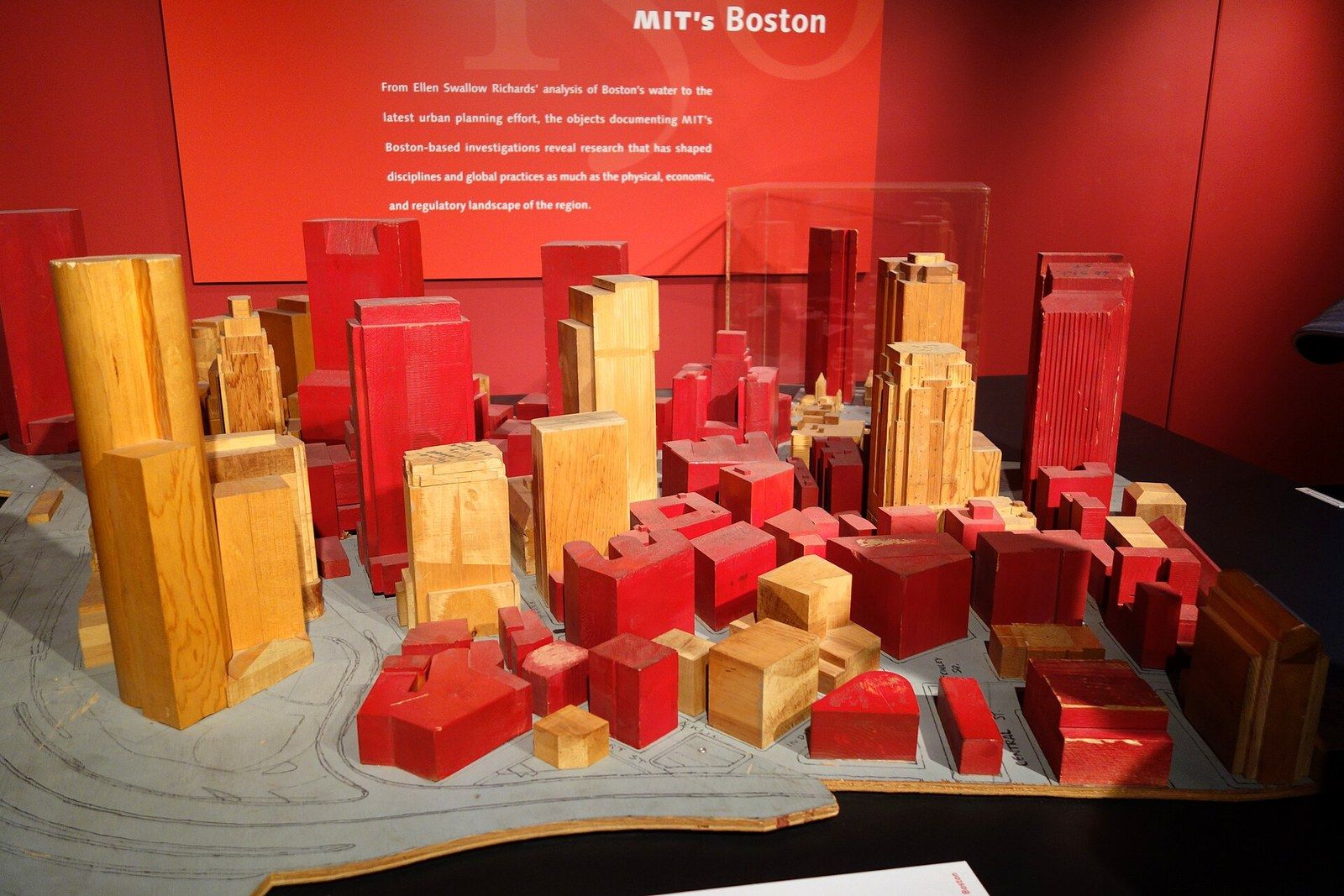
Walk, finally, into the tunnel where that data comes from. In 2002 researchers at the University of Western Ontario built a 1 to 500 model of 7 World Trade Center and its neighbourhood, about a foot and a half tall, and set it inside a 128 foot boundary layer tunnel, where sensors logged thousands of readings of pressure, speed and deflection as the wind machine ran from breeze to hurricane, according to The New York Academy of Sciences.6 Codes did not require the test, the Academy notes, but they permit designs based on it, and the result is usually a building engineered more precisely and less expensively than the conservative code values would give.6 Three models were run because the surroundings at Ground Zero were not yet decided, and the neighbourhood is part of the measurement.6
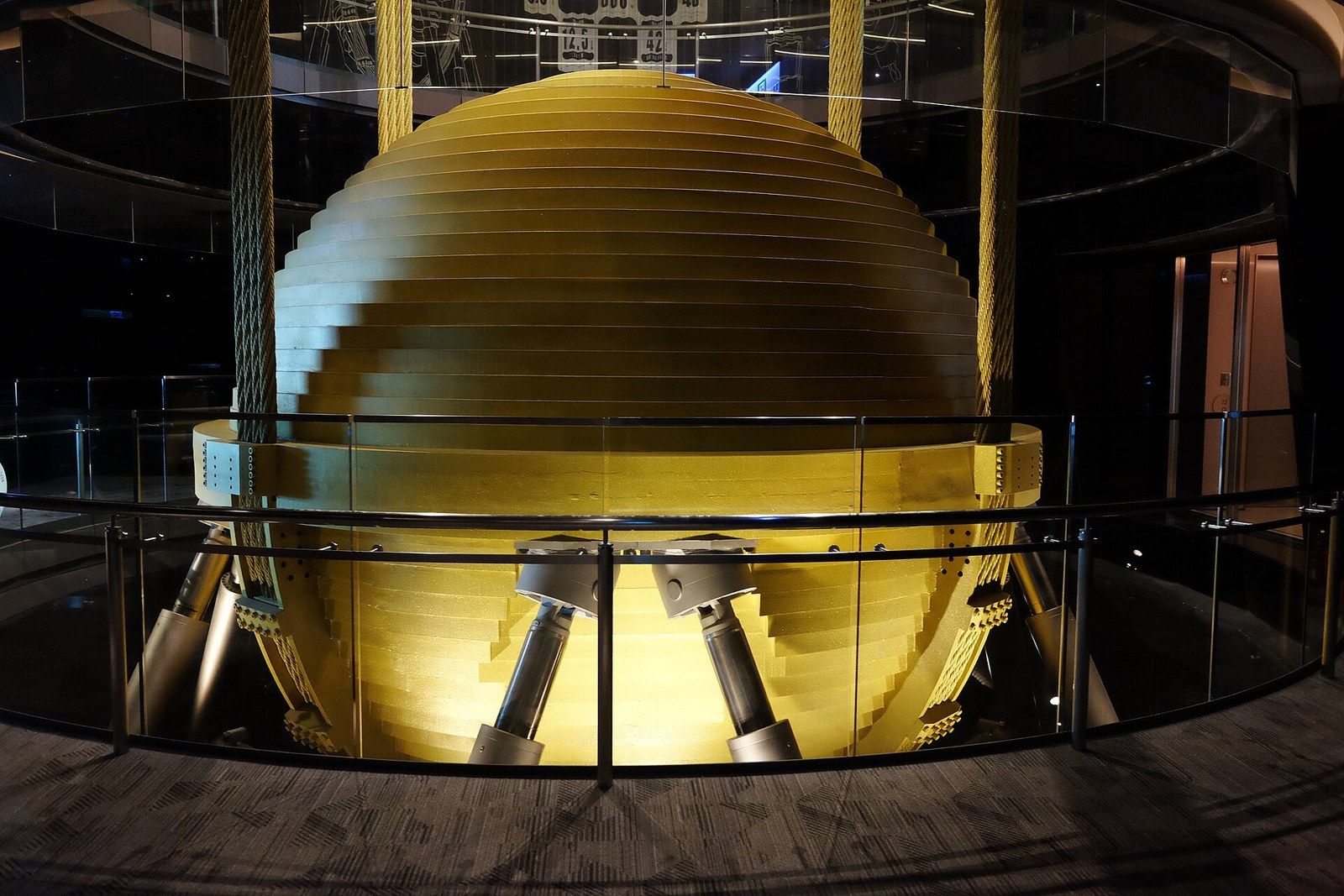
The remedies are the subject of their own entries on building shape, damping and on tuned mass dampers, but their logic follows from the walk. Softening or notching the corners weakens the vortices at their source; tapering or stepping alters the width, and so the shedding rate, from level to level so that the swirls never line up along the height; openings let air bleed through. Stellar Structures adds that a taller and narrower plan is more prone to the effect, and cites the spiralling Shanghai Tower, whose form trimmed wind loading by about a quarter.7 Research is now reaching past hardware altogether: a team at Imperial College London and Arup, reported by Newsweek, allowed a group of inhabited floors high in a model tower to shift a little relative to the core, sprung and damped, and measured peak accelerations up to 71 percent lower under test, a result its own authors describe as promising but unproven.8
So the walk finishes high up, on a still looking afternoon. The flags below hang limp in the lee of the building and the sidewalk gale of the morning has passed. Yet the water in a glass is trembling, because a breeze at a particular speed has been blowing evenly across the open river for twenty minutes, and the tower has found its rhythm in it. For the people who live up here, that is the wind that counts, and it is the one this cluster of entries is about.